Welcome!
The jokes, games, pictures, movies and whatever else we've put on these pages have been sent to us by people all over the world.
Each item is screened to ensure that they are appropriate for viewers of all ages. So sit back, relax and get ready to roll on the floor laughing.
Send us your favorite jokes so we can share them with folks who need to laugh!
If any of the items on these pages are copywritten, please let us know and we will give credit where credit is due or remove them from our pages.
How To Give a Dog or a Cat a Pill
CAT:
1. Pick cat up and cradle it in the crook of your left arm as if holding a baby. Position right forefinger and thumb on either side of cat's mouth and gently apply pressure to cheeks while holding pill in right hand. As cat opens mouth pop pill into mouth. Allow cat to close mouth and swallow.
2. Retrieve pill from floor and cat from behind sofa. Cradle cat in left arm and repeat process.
50 WAYS TO CONFUSE, WORRY, OR JUST SCARE PEOPLE IN THE COMPUTER LAB
- Log on, wait a sec, then get a frightened look on your face and scream "Oh my God! They've found me!" and bolt.
- Laugh uncontrollably for about three minutes and then suddenly stop and look suspiciously at everyone who looks at you.
- When your computer is turned off, complain to the monitor on duty that you can't get the damn thing to work. After he/she's turned it on, wait five minutes, turn it off again, and repeat the process for a good half hour.
Things You Don't Want to Hear During Surgery
- Oops!
- Has anyone seen my watch?
- That was some party last night. I can't remember when I've been that drunk.
- Damn! Page 47 of the manual is missing!
- Well this book doesn't say that... What edition is your manual?
- Okay, now take a picture from this angle. This is truly a freak of nature.
Application to Date My Daughter
NOTE: This application will be incomplete and rejected unless accompanied by a complete financial statement, job history, lineage, and current medical report from your doctor.
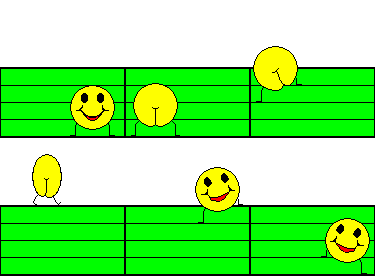
Back of Smiley
Have you ever wondered what the other side of a smiley face looks like? Well, wonder no more...
A Maineiac
Mainer = A person who stays in Maine for an entire winter.
Maineiac = A person who doesn't have the sense to leave Maine after the 1st winter.


